
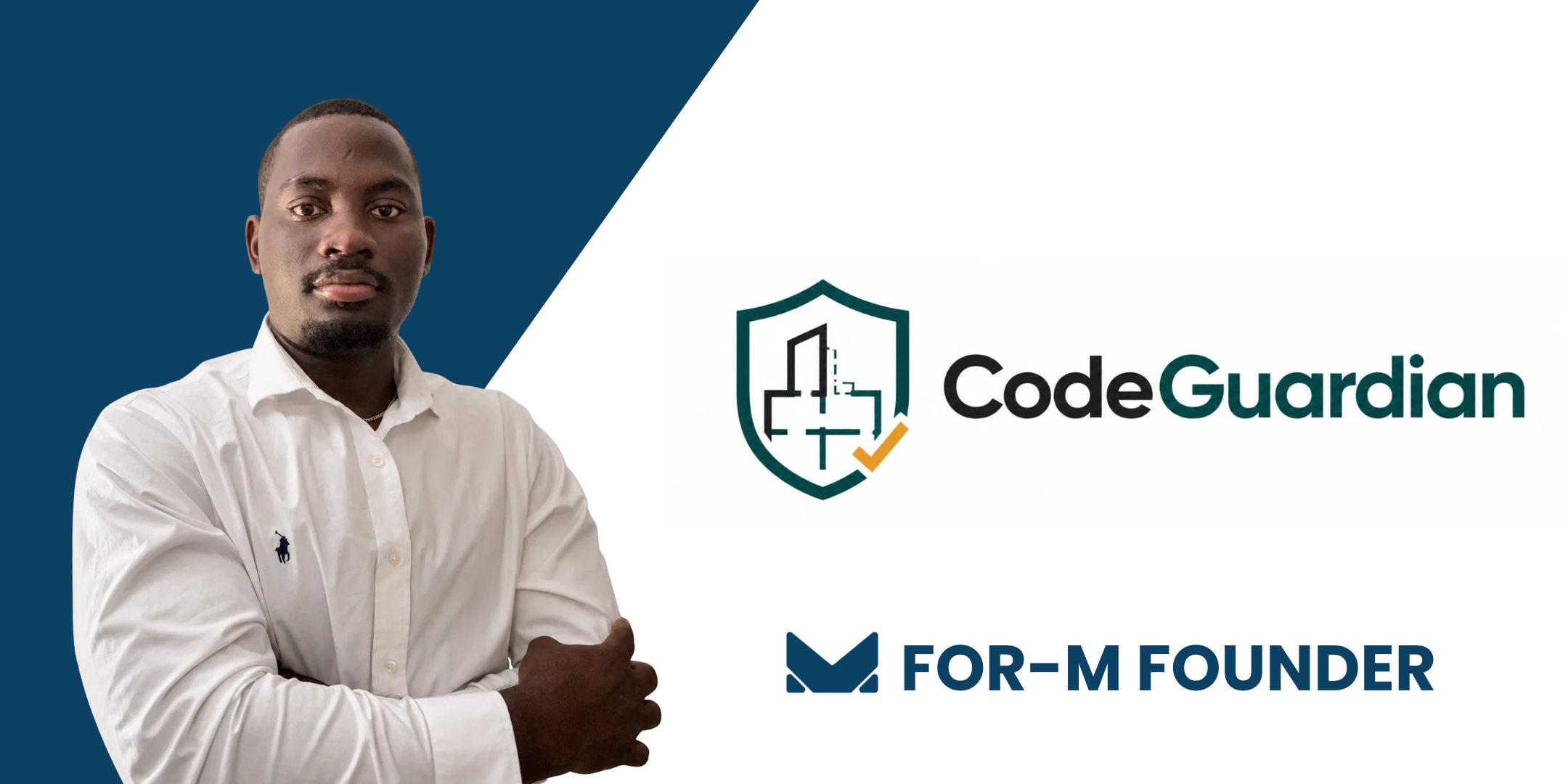
Late-stage building-code surprises cost architecture firms time, money and momentum. When compliance issues surface after substantial design work is already complete, architects are forced to backtrack and revisit foundational decisions that could have been resolved months earlier.
Adedayo Otitolaye saw this recurring friction firsthand across three internship and externship experiences, as well as while working remotely with U.S. architecture clients from Nigeria starting at age 19. That realization inspired him to build CodeGuardian, an AI-assisted review tool that operates directly inside Revit, software used to design and document buildings in 3D. Rather than attempting to automate away professional judgment, CodeGuardian flags potential building-code compliance and documentation issues early, giving architects findings they can verify and act on while developing their designs.
Transitioning from architecture to entrepreneurship meant learning software development, customer discovery, and business fundamentals from scratch. But as Adedayo quickly recognized, spotting a real problem is only the beginning. The harder discipline is proving that your solution fits into how people actually work.
To turn his domain insight into a viable, user-centered product, Adedayo joined FOR-M, Milwaukee’s early-stage tech startup incubator. He wanted a structured space to challenge his assumptions, understand which workflow headaches mattered most to other architects, and determine where his software could deliver meaningful value.
Through FOR-M workshops on customer problems, prototyping, business models and financials, Adedayo shifted from building around unvetted assumptions to designing clear experiments. That shift transformed his user research: instead of seeking validation, he now asks architects for candid feedback on whether CodeGuardian solves real problems and where the product falls short.
“A clear experiment and an honest result will teach you more than a polished explanation of an untested assumption.”
Today, Adedayo operates as a solo founder, steering CodeGuardian through product development, business planning, and user evaluations. His advice to fellow entrepreneurs in #mketech is grounded in disciplined testing: start with a problem you can investigate closely, understand what existing workarounds cost, and watch how users behave rather than relying on polite encouragement. Someone liking an idea is very different from using it repeatedly or paying for it.
For Adedayo, building in our region offers a clear advantage. He believes Milwaukee’s opportunity is to connect technical builders directly with the practitioners who know their industries inside out, including architects, contractors, and manufacturers whose frontline experience should shape what gets built from day one. He is currently welcoming conversations with architects and BIM professionals willing to test CodeGuardian and offer honest feedback.
Interested in joining FOR-M? Applications are accepted on a rolling basis, apply now!